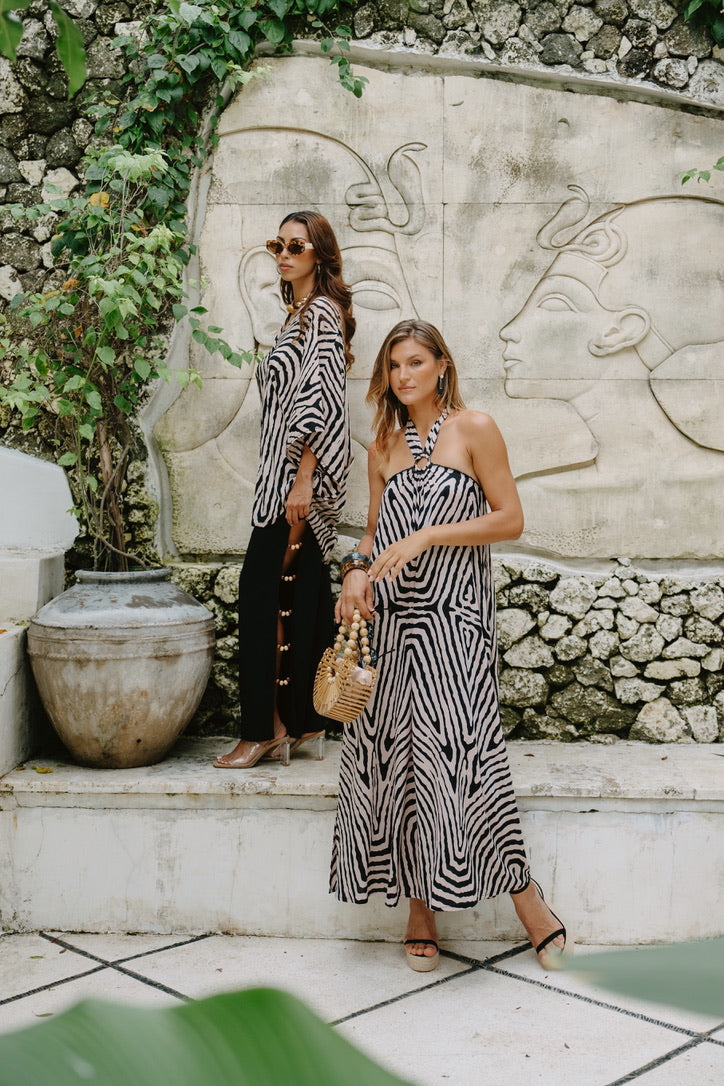
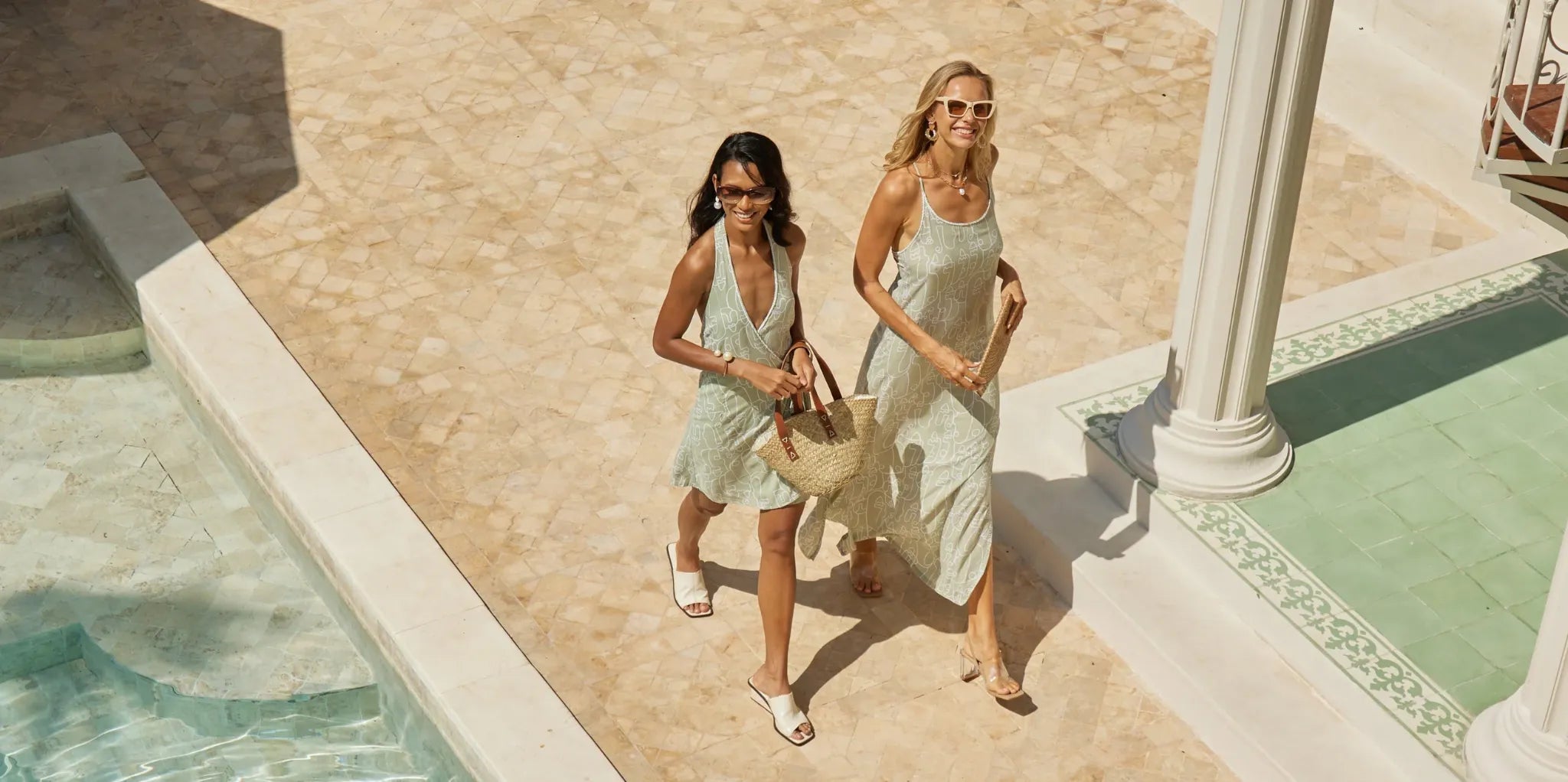
How to Wear a Kimono in Summer With Ease
A summer kimono earns its place in your suitcase long before the first sunset cocktail. It can soften a simple swimsuit, give denim shorts a more considered mood, or turn a slip dress into something worthy of a candlelit dinner by the sea. Knowing how to wear a kimono in summer comes down to one beautiful balance: keeping the layers light while letting the silhouette make an entrance.
For resort days, festival afternoons, and moonlit island plans, think of a kimono as your most expressive finishing layer. It should move with the breeze, reveal rather than conceal your outfit, and bring a touch of print, texture, or color to the pieces you already love.
How to Wear a Kimono in Summer Without Feeling Overdressed
The secret is to build from a clean, uncomplicated base. A kimono has presence, particularly one with a vivid print, fringe, embroidery, or a dramatic fluid sleeve. Give it room to shine by pairing it with pieces that feel pared back: a bikini and sandals, a white tank with cutoffs, a linen camisole and wide-leg pants, or a minimal slip dress.
This is not about making every look plain. It is about contrast. An ornate Ocean Mandala-style print feels fresh over crisp white cotton. A softly washed tie-dye kimono can bring warmth to black swimwear or a chocolate-brown ribbed dress. When the layer is flowing and decorative, a close-fitting or simple underlayer keeps the outfit intentional rather than busy.
Length changes the mood, too. A short kimono is playful, easy, and ideal for hot afternoons when you want a little coverage without much fabric. A mid-length style works beautifully with shorts, skirts, and swimsuits. A floor-skimming kimono creates its own kind of occasion, especially over a sleek dress or a matching set at sunset. If you are petite, a shorter length or an open front that reveals the waist can help keep your proportions defined. If you love a more statuesque silhouette, let a long hem trail softly over flat leather sandals.
Start With Fabric That Can Handle the Heat
Summer styling begins with how a garment feels against sun-warmed skin. Look for airy fabrics and open construction that allow movement and circulation. Lightweight viscose, cotton, gauze, silk blends, and fine woven fabrics can all work well, depending on the climate and the occasion.
For humid beach days, a looser weave and relaxed fit will feel more comfortable than anything dense, lined, or restrictive. A sheer or semi-sheer kimono over swimwear is especially effortless because it offers a little sun coverage without the weight of another full outfit. For dinner, choose a fabric with more drape or a subtle sheen. It catches the evening light and makes even simple sandals feel elevated.
Details matter here. Lace insets, open sleeves, side slits, and fringe movement all create breathability visually and physically. Heavy embellishment can be stunning after dark, but in midday heat, it may feel too formal or too warm. Let the time of day guide the level of drama.
Three Summer Kimono Outfits That Always Work
Over Swimwear at the Beach or Pool
This is the kimono at its most natural. Slip it over a bikini or one-piece when you are walking from your room to the pool, settling into a beach club, or stopping for lunch after a swim. A long kimono can make a classic black swimsuit feel cinematic, while a short printed version adds color to a neutral bikini.
Keep the rest easy: flat sandals, oversized sunglasses, and a woven beach bag are enough. If you plan to sit down for lunch, add tailored shorts beneath the kimono or choose a swimsuit that can pass for a bodysuit. The effect is relaxed but never accidental.
With Denim Shorts for a Day in Town
Denim cutoffs and a kimono are an island uniform for a reason. The denim grounds the softness of the layer, while the kimono makes a basic tank or bandeau feel personal. Choose high-waisted shorts if you want to show a little shape beneath a longer, open kimono.
A fitted ribbed tank, a tucked-in camisole, or a simple crochet top all work. Avoid adding too many competing bohemian pieces at once. If the kimono has fringe and a bold print, skip the oversized statement belt, heavily decorated hat, and stacks of loud jewelry. Let one element carry the story.
Over a Slip Dress After Sunset
For island nights, use a kimono in place of a jacket. A bias-cut slip dress, a body-skimming midi, or a minimal maxi creates a sleek canvas for a printed or embroidered layer. This pairing is especially lovely when the dress and kimono share a color family without matching exactly: sand with gold, ivory with coral, indigo with turquoise, or black with a deep sunset print.
A long kimono adds movement as you walk and offers a little warmth once the sea breeze arrives. Finish with strappy sandals or low heels, a small clutch, and earrings that catch the light. You do not need a necklace if the neckline, print, or trim is already doing the work.
Create Shape Without Losing the Float
A kimono is meant to be fluid, but fluid does not have to mean shapeless. If you prefer definition, try a light belt at the waist, a narrow tie, or a half-tuck of the underlayer. You can also let the kimono fall open over a fitted top and high-rise bottoms, creating a vertical line that elongates the frame.
Belting depends on the cut. A finely draped kimono with a soft fabric can look beautiful loosely cinched at the waist. A heavily fringed or embellished piece often looks better left open, so the trim can move naturally. If the kimono has wide sleeves, make sure your base layer has slimmer proportions through the torso and legs. This small adjustment keeps the outfit balanced.
There is also a practical consideration. An open kimono is breezier and more casual. A belted one feels more like a dress or tunic, which can be useful when you want to go from beach bar to dinner without changing. Both are right. The better choice is the one that suits the heat, your plans, and how much freedom of movement you want.
Let Print Lead, Then Edit the Accessories
Kimonos invite color, and summer is the moment to enjoy it. Sun-faded pinks, ocean blues, warm clay tones, tropical greens, and lunar black-and-gold palettes all have their place. The most flattering approach is often to pull one quiet color from the print and repeat it elsewhere in your outfit.
For example, a kimono with turquoise and rust can be worn over an ivory dress with tan sandals. A purple-and-gold print can sit beautifully over a deep plum swimsuit. This creates harmony without looking overly coordinated.
Accessories should feel collected, not crowded. Gold hoops, shell-inspired earrings, a slim cuff, or a few fine necklaces can bring polish. For daytime, reach for a raffia bag, leather slides, or a simple espadrille. For evening, swap to a compact bag and more sculptural jewelry. If your kimono is plain or tonal, you can be bolder with the accessories. If it is a statement piece, restraint makes it feel more luxurious.
A Note on Kimono Style and Cultural Respect
The word kimono refers to a traditional Japanese garment with its own history, construction, and formal wearing practices. In resort fashion, “kimono” is commonly used for a loose, open-front layering piece inspired by its silhouette, rather than a traditional Japanese kimono.
Wearing a fashion kimono with appreciation means avoiding costume styling and treating it as a contemporary cover-up, jacket, or flowing layer. Choose pieces for their artistry, drape, and craftsmanship rather than trying to imitate traditional dress. That distinction keeps the look stylish, respectful, and true to the carefree purpose of summer resortwear.
Make It Work Beyond Vacation
A beautiful kimono should not disappear into a drawer once you are home. Over a white T-shirt and jeans, it brings a little Ibiza light to an ordinary dinner. Over a tank dress, it is an easy answer to overly air-conditioned restaurants. At a summer music event, it can replace a denim jacket while feeling lighter and more expressive.
At Hippy Chick Ibiza, the most memorable kimono styling is never about following one strict formula. It is about choosing a piece that feels like you, then letting it travel from saltwater afternoons to starry nights with very little effort.
Wear yours open when you want the breeze, belt it when you want a new silhouette, and let its print do what summer clothes should do: make an ordinary plan feel like a small escape.